
America’s Pessimism Crisis
It’s been midnight on the left and right for far too long.
By Kyle Smith
Free Expression is a daily newsletter on American life, politics and culture from the Opinion pages of The Wall Street Journal. Sign up and start reading Free Expression today.
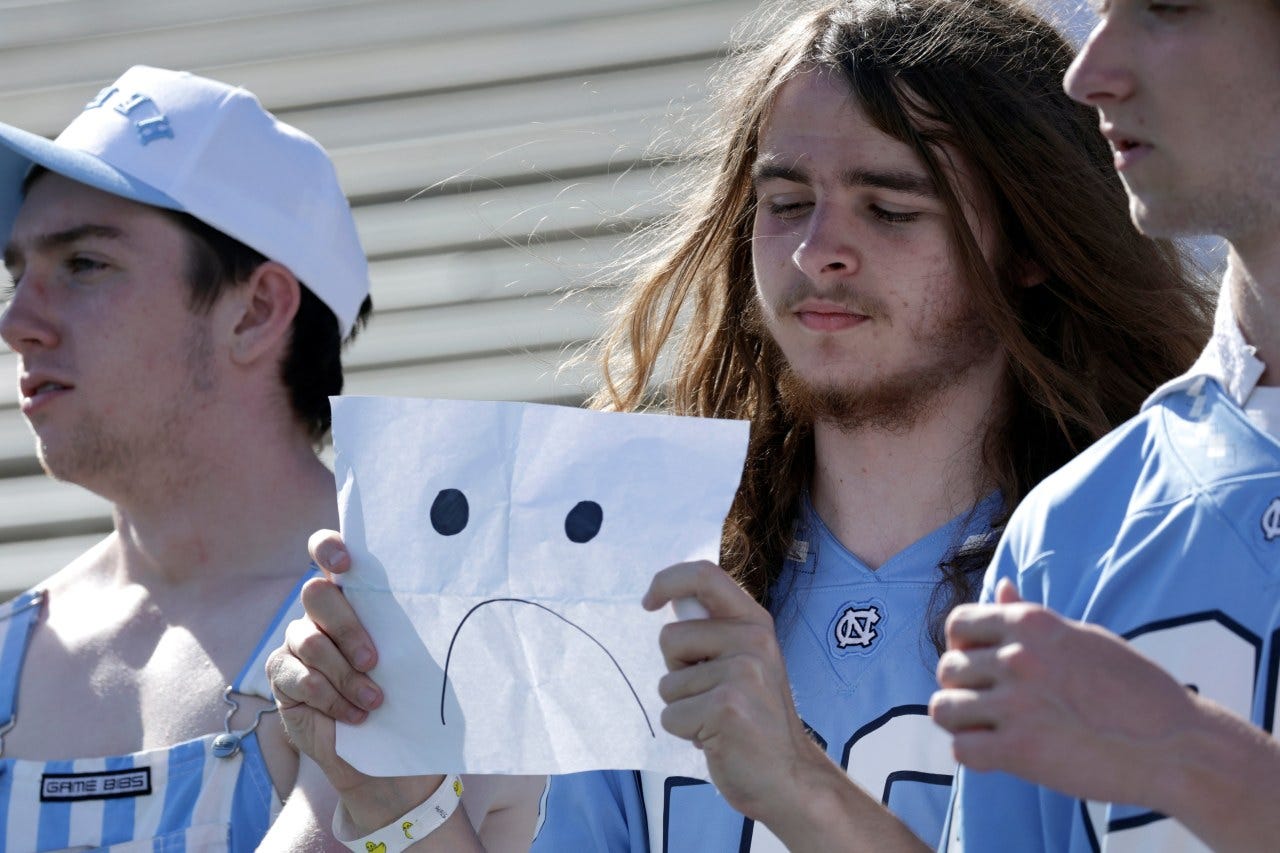
Populism on the right and socialism on the left are generating a lot of well-justified unease. But what if they’re rooted in the same problem? Call it the pessimism crisis.
On the right, people are frightened about crime and mass illegal immigration. The cultural fabric, people say, is tearing. Meanwhile, among many on the right as well as the left, there is a growing anger based in a belief that the economy is rigged and the American dream is dead.
Both sides have facts they love to cite. Have you heard subway murders in New York City early this year shot up by 300%? Up to May 9 of last year, there was one murder in the system. That went up to four this year. In recent years there have been, on average, eight murders in the subway. Earlier this century that number was more like five. So: a 60% increase.
Gulp, right? Until you think about how many subway rides there are: about 1.3 billion annually. At eight instances a year, your chances of being murdered while riding the subway are about 1 in 162 million. These are astronomical, win-the-lottery odds.
As I try to teach my children (both expert subway riders, and neither of them packing weapons), if you want to worry about something, don’t pick something that’s literally a one-in-a-million shot. Worry even less about a 1 in 162 million possibility.
It’s a strange fact of American life that people almost always tell pollsters crime is rising even when it isn’t. Last year this figure was merely a plurality (49%, compared with 33% who said crime was falling). In general, large majorities of Americans have said they think crime is rising over the past 20 years. Statistics all over the country paint a different story. Starting in the early 1990s, crime started to fall, and it mostly kept falling, except for a disturbing jump during the pandemic years. Then the decrease resumed, in many cases drastically.
In the first six months of this year, the number of murders in New York hit a record low. According to the best stats available, the city is safer than it has ever been. No, this isn’t a story of heroic advances in medicine; shootings similarly plummeted. Other cities are also showing good news. Whatever happened crime-wise during the pandemic, things are mostly back to normal, and in many cases better than before.
The right tends to feel more concerned about crime. But what crime anxiety is on the right, economic insecurity is on the left. Young people are increasingly taking a furious turn to the hard left because they think they’re getting mugged by the economy.
This story is untrue. Millennials and Gen Z are building wealth faster, and enjoying higher median incomes, than previous generations at the same age. Young people tend not to believe they’re doing well—they spend a lot of time envying each other on Instagram—and some deride this actual, measurable wealth as “phantom wealth.” Phantom fear would be a more accurate term. Yet nearly half (45%) of young Americans say they’re struggling economically; only 29% say they expect to be better off than their parents. Hence the socialist surge among the young. People who feel they’re losing want the government to step in and even the score.
In a way, Vice President JD Vance is the perfect political figure for our moment because he’s pessimistic about everything (except whether we should trust the ayatollah).
If President Trump generally extols the economy (at least when he’s in office), the vice president defaults to a broader, darker view. Mr. Vance carries both the millennial resentment about the supposedly rigged economy and an angry old white guy’s view that the culture has gone to hell.
It shouldn’t surprise you that he keeps taking potshots at Ronald Reagan’s policies. Reagan was an optimist. He didn’t think the economy was rigged, except by the regulatory state, and certainly didn’t think more government would unrig it.
Reagan would have scoffed at the idea of a bureaucracy that says, “We’re from the government, and we’re here to help . . . you live your best life.” Mr. Vance, by contrast, is fiercely dedicated to intertwining culture and economics: “If a set of economic policies make it possible to raise a family, to earn a living wage, to give back to their community, to maybe go to church on Sunday, or to actually spend some leisure time building the kind of life that matters, that is the sort of thing we want to be supportive of.” That’s a lot of “ifs” to weigh.
Economic liberty shouldn’t be subjected to Mr. Vance’s tests. There are enough regulations and restrictions already.
Reagan would heartily agree that raising a family and going to church are good things, but he’d be shocked at the suggestion that economic freedom isn’t a good thing in its own right, and would properly sound the alarm about federalizing your family’s vision of the good.
So it’s also not surprising that, while trashing Reagan’s devotion to Milton Friedman, Mr. Vance is trying to rehabilitate Richard Nixon, who was a hawkish economic liberal whose administration accepted and even advanced the liberal Great Society project, ensuring we’d be stuck with it forever.
Can a politics of optimism return? Can it stop being midnight in America? I’m pretty pessimistic about that, although Marco Rubio exhibits some Reaganesque qualities. For decades, the media was derided for viewing everything through a grubby lens: “If it bleeds, it leads.” But things have gotten even worse in the age of social media: If it complains, it reigns.
Mr. Smith is a Free Expression columnist at WSJ Opinion.
I'm so happy I get to read your columns again, Kyle! I looked forward to your articles when you were at National Review.
Thanks for being more of an optimist!