

Cosmetic Surgery’s False Promises
The industry is now selling self-actualization alongside beauty and eternal youth.

By Sarah Jane Souther
Free Expression is a daily newsletter on American life, politics and culture from the Opinion pages of The Wall Street Journal. Sign up and start reading Free Expression today.
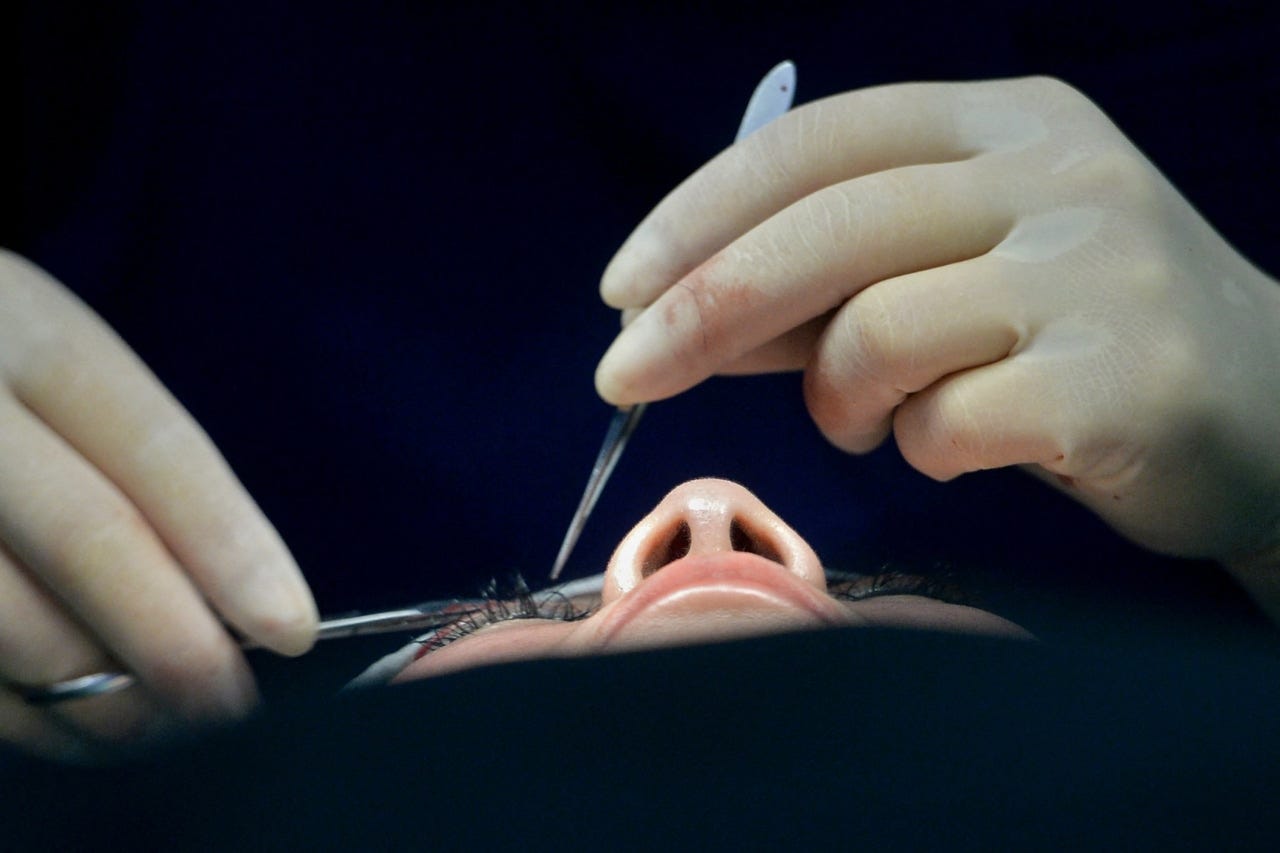
Women have done painful and extreme things in the name of beauty and cultural expectations for centuries—foot binding in China, neck rings in Myanmar, lip plates in Ethiopia. In the West, some women laced corsets so tight they passed out for lack of oxygen. Now, in the Botox and blepharoplasty era, cosmetic enhancements offer women more than the promise of beauty. The surgeon’s knife can deliver self-actualization. A little filler may be all you need to achieve a confident, more authentic you.
But not only does cosmetic surgery fail to deliver on its promises of self-actualization—the industry operates off the false premise that self-actualization is what makes women happy in the first place.
According to the American Society of Plastic Surgeons, in 2024 more than 29 million cosmetic procedures were performed in the United States. Women accounted for 94% of surgical procedures and 93% of the minimally invasive ones like Botox and skin-tightening. Genital cosmetic surgery, specifically labiaplasty, increased 217.3% from 2012-17. As English sociologist and bioethicist Tom Shakespeare notes in an essay for the BBC, “Ironically, while the UK has banned female genital mutilation, it is simultaneously having a booming trade in labiaplasty.”
As the cosmetic surgery industry booms, a common argument is circling—one that says, no matter their age, women should be able to do whatever they want with their bodies, and no one should be allowed to comment on those choices. But as many as 15% of cosmetic procedure patients suffer from body dysmorphia. And while some report a confidence boost postprocedure, improved self-esteem isn’t a guarantee. Some who go under the surgeon’s knife actually find their mental-health problems get worse.
Women who get breast implants are significantly more likely to commit suicide than women who don’t. These troubling statistics don’t imply a cause-and-effect relationship between breast augmentation and suicide, but they may point to something about those drawn to cosmetic surgery. These women’s issues may not be about breast size or self-confidence. They may be suffering from a much deeper, more dangerous discontent that can’t be solved with a surgical fix.
Cosmetic surgery doesn’t increase satisfaction with body image, and our quest to be our most authentic selves has introduced confusion over what real, human women are supposed to look like. Women are caught in a cultural maelstrom of technology, media, health and self-care. Here, beauty becomes a defining personal quality and the best strategy for success and peace of mind.
There is a real cultural pressure for women to be beautiful, and an inherent desire within women to accentuate their own beauty. But when beauty itself becomes the ultimate goal, women are distracted from pursuing the tenets of human happiness: meaning, purpose and loving relationships. None of which can be found via surgical fixes.
The cosmetic procedure, in all its forms, seems to promise everything at once—more beauty and better mental health. In her most recent Hulu comedy special, Nikki Glaser equates getting a facelift to getting a sociology degree; simply another way for women to improve themselves. Well-known actresses debut new faces on the red carpet. Wellness influencers tout the benefits of Botox and filler. And Jennifer Lawrence, when asked if she’d had a facelift, replied, “No. But, believe me, I’m gonna!”
By refusing to be honest about the realities and implications of cosmetic surgery, we do harm to the next generation of women. They may be liberated from the corset, but we leave them with something worse: poison injected into their skin, risky surgeries and the false promise of eternal youth and beauty.
Ms. Souther is a graphic designer and writer who lives in Manhattan.
Labiaplasty? What do women think Georgia O'Keeffe's paintings celebrate?