
Democrats vs. the AI Ad Machine
California lawmakers are pushing a bill that could target the viral videos behind the rise of Republican candidates in their state.

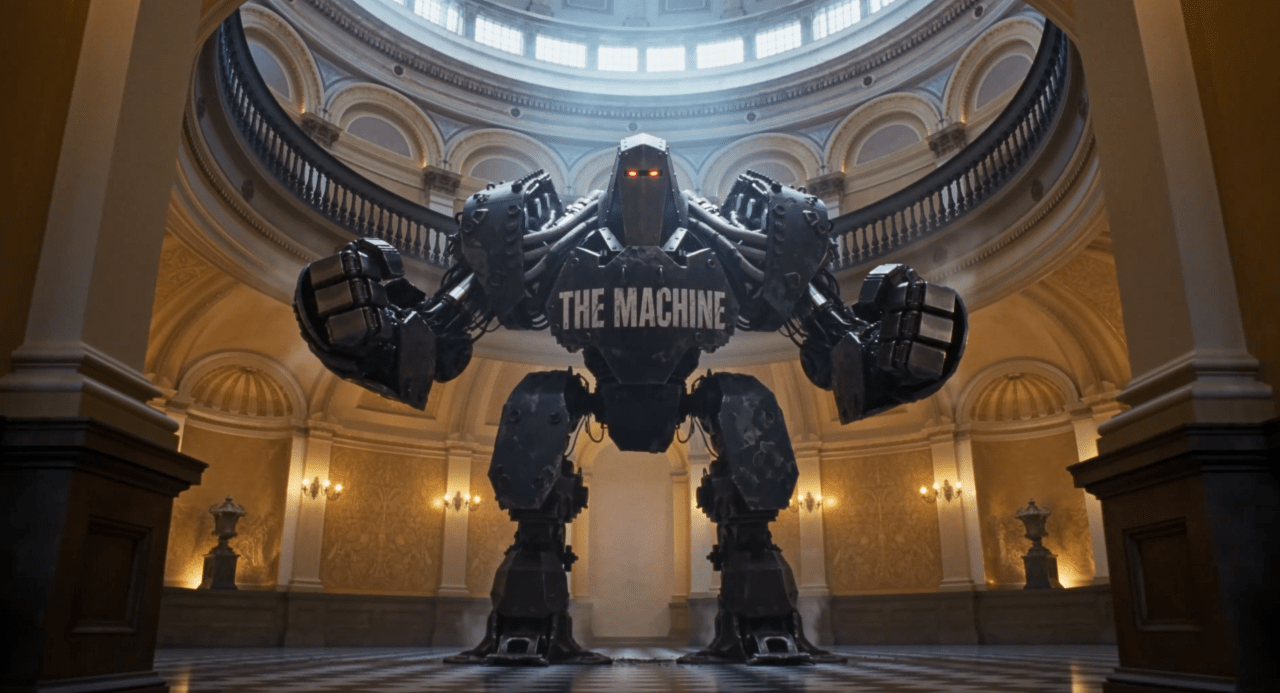
AI-generated clips have taken this election season by storm. One recent example shows GOP gubernatorial nominee Steve Hilton rescuing California from a literal “machine” run by the state’s Democratic establishment. Another remakes LBJ’s famous “daisy girl” spot by swapping the threat of nuclear war for “gender reassignment” surgery in an attack on Texas senatorial candidate James Talarico. Perhaps most famous was a fan-made video that portrayed Los Angeles mayoral candidate Spencer Pratt as Batman saving the city from Karen Bass dressed as the Joker.
Yet just as these AI-generated videos prove their potency online, some are trying to press pause. California’s Sen. Adam Schiff and Rep. Ro Khanna, both Democrats in a state where AI ads have boosted two unlikely Republican challengers, are backing the AI Ads Act to prohibit “the use of AI in whole or in part” to represent political candidates or committees falsely and to solicit campaign funds.
The bill, which Mr. Schiff first introduced as a representative in 2024 and reintroduced as a senator on July 30, would amend the Federal Election Campaign Act of 1971 to target AI-generated content. The senator also introduced the Promoting Authenticity With Influencer Disclaimers Act, which would require influencers to disclose who paid them to post. “With November elections around the corner, time is of the essence to reign [sic] in false political advertising,” he said in a statement.
Some states have already tried to regulate AI in political messaging. In the absence of comprehensive federal rules tackling election-related deepfakes, 31 states have enacted laws either requiring disclosures or prohibiting such ads altogether. Deepfakes are deceptive AI manipulation, typically doctoring a subject’s face or voice to make him appear to do or say something that never happened. They predate the Pratt-style ads, which are clearly over-the-top parodies constructed entirely by AI—the sound, the imagery, the script. Their recent rise has generated political momentum for regulation, sparking fears of possible restrictions to free speech.
The AI Ads Act would broaden liability for AI-generated ads to anyone purporting to act on behalf of a candidate or committee, not only candidates, campaigns or their surrogates. “Virtually all campaign communications and political advertising created with the help of digital and internet tools could be theoretically roped into this law,” said Jake Morabito, the senior director of policy at the American Legislative Exchange Council.
By eliminating the requirement that the content in question must be “damaging” to an opposing campaign to be deemed illegal, the bill abandons “a limiting principle that helped keep the statute tied to fraud,” said Alex Sharpe, a cybersecurity and AI expert at the Foundation for Defense of Democracies. Removing that limiting principle places us on a “slippery slope.”
The bill’s backers contend that it targets “fraudulent misrepresentation,” not constitutionally protected satire. The difference is between content that intends to manipulate viewers for financial or political gain, which the courts treat as unprotected speech, versus content that uses obvious exaggeration to comment on a public figure, such as a “Saturday Night Live” sketch or political cartoon. Rhetorical hyperbole and even false statements made in public enjoy strong free speech protections.
AI-generated campaign ads can blur that line. A video can look and sound exactly like a real politician, yet a reasonable viewer could also see it’s clearly fictitious, even if there isn’t a “Made by AI” disclosure. It’s also not always clear what counts as AI-generated and what counts as a deepfake, since the definitions and applications of this technology are evolving rapidly. Expect more of these ambiguities as AI tools become increasingly powerful, cost-efficient and easy to use.
The AI Ads Act is likely to hit political roadblocks when Congress reopens in the fall, and legal challenges if it passes. If it bans political satire performed by AI actors that impersonate candidates, or digitally altered campaign videos like those featured in Mr. Pratt’s campaign, “the statute risks reaching core political speech protected by the First Amendment,” said John Coleman, legislative counsel for AI and free expression at the Foundation for Individual Rights and Expression.
A federal judge struck down California’s version of the AI Ads Act last year on such grounds. Gov. Gavin Newsom signed Assembly Bill 2839 in 2024 to ban “materially deceptive” election-related deepfakes in response to clips parodying presidential candidate Kamala Harris. Judge John Mendez ruled that the content-based speech restriction failed the Supreme Court’s strict-scrutiny test. He argued that serious fears about deepfakes don’t provide legislators “unbridled license to bulldoze over the longstanding tradition of critique, parody, and satire protected by the First Amendment.” The antidote to such political expression is “encouraging counter speech, rigorous fact-checking, and the uninhibited flow of democratic discourse,” he wrote.
In our sensationalized media landscape, political hopefuls are being cast as the heroes or villains of miniature manufactured movies that voters see on their feeds. As Judge Mendez wrote, “YouTube videos, Facebook posts, and X tweets are the newspaper advertisements and political cartoons of today.” Will the tools that power this content soon be relegated to yesterday?
Ms. Koch is associate editor of Free Expression.