

Enough With the Disney Remakes
The failure of ‘Moana’ suggests audiences are finally tiring of these rehashes.

Free Expression is a daily newsletter on American life, politics and culture from the Opinion pages of The Wall Street Journal. Sign up and start reading Free Expression today.
Everything you need to know about Disney’s live-action remakes of its own animated films, of which this past weekend’s “Moana” is the latest, you can learn by watching the first four minutes of “The Lion King”—both versions.
The 1994 animated original uses a wide color palette to immerse the viewer in a mythological African wilderness, whose denizens assemble to behold for the first time the lion cub that will someday rule them. Before a mandrill anoints the cub with red juice from a Baobab fruit, he holds it in front of the rising sun and cracks it open. There’s a blinding flash as he does so. One series of frames pulls off the amazing trick of having a nonexistent camera shift focus from a line of ants marching across a stick to the animals moving below.
The 2019 remake recreates every shot from the opening of the original. Or at least it attempts to. The camera again shifts focus, but this time, the stick and the ants almost disappear. The landscapes have lost their striking hues. The fruit is now a bunch of roots torn against a bland sky. The animals are now photorealistic via CGI, which means they’re not realistic at all. The animated version has its creatures behave in ways they never would in the wild. They talk and often decline to eat each other. We’re already bought into this animated world, so we don’t care. But in semi-real-life, it’s jarring.
In 2019, it worked. Bring back James Earl Jones as Mufasa, throw in Beyoncé and Donald Glover, and ta-da: Disney has a billion-dollar-plus movie built on the foundation of the old and powered by viewers nostalgic for . . . something they could already watch.
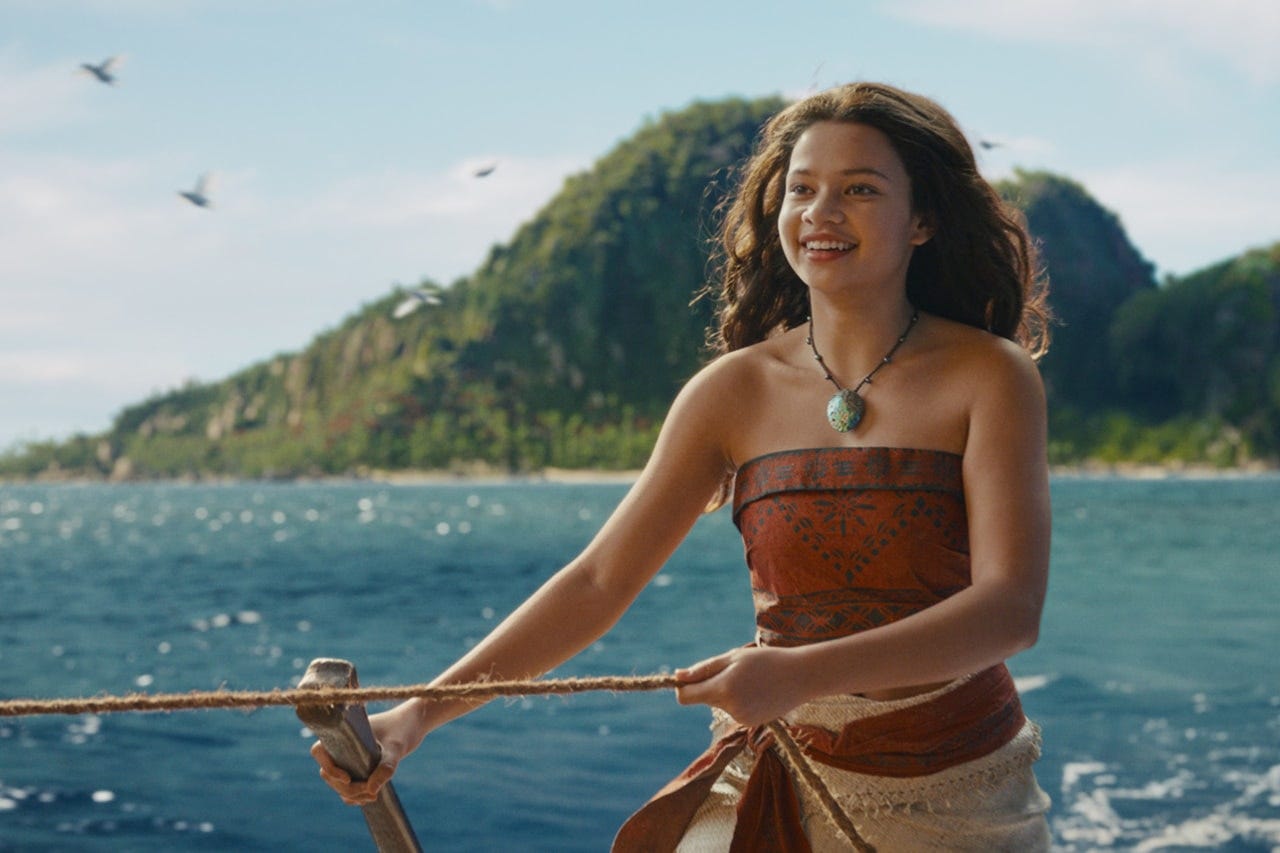
Things are different in 2026. “Moana,” which retools a popular 2016 film, flopped in its opening weekend, dramatically underperforming expectations. It earned $95 million globally on a $250 million production budget, which doesn’t count promotion costs. Its debut was on par with last year’s disastrous “Snow White” remake. That movie was undone in part by star Rachel Zegler’s criticism of the 1937 original. Disney might not exist had that movie failed, but Ms. Zegler derided it as “dated” and “weird.” That turned out to be a poor marketing strategy. The remake lost Disney $170 million.
“Moana” didn’t denigrate its source material. Dwayne Johnson returned from the animated original to play the same role in live-action. The plot is virtually identical. This very fealty makes one wonder why the movie exists at all. The original is only 10 years old. It had an animated sequel less than two years ago. But for Disney, there’s rarely too much of a good thing until it’s too late. When the studio acquired popular brands Star Wars and Marvel Studios, it pumped out movies and TV shows until the appeal wore off. As Bob Iger, then the company’s CEO, admitted last year, “we lost a little focus by making too much.”
Was “Moana” an outlier? Maybe. Two relatively recent animated predecessors and a marketplace crowded by other such films, including Disney’s own “Toy Story 5,” may have hurt its chances. In 2025, a Disney remake of “Lilo & Stitch” was a box-office triumph. DreamWorks remade “How To Train Your Dragon” with similar results.
But there’s far more evidence that the appeal of this kind of movie is eroding. It’s certainly no longer a guaranteed success as was the case only a few years ago. It’s easy to see why. Make it too much like the original, and people will wonder why they should see a new, desaturated, CGI-drenched version. But undercutting the original loses its fans. If these movies keep flopping, expect Hollywood to move on to something else. It’s the circle of life.
Mr. Butler is deputy editor of Free Expression.