

By Daniel Horan
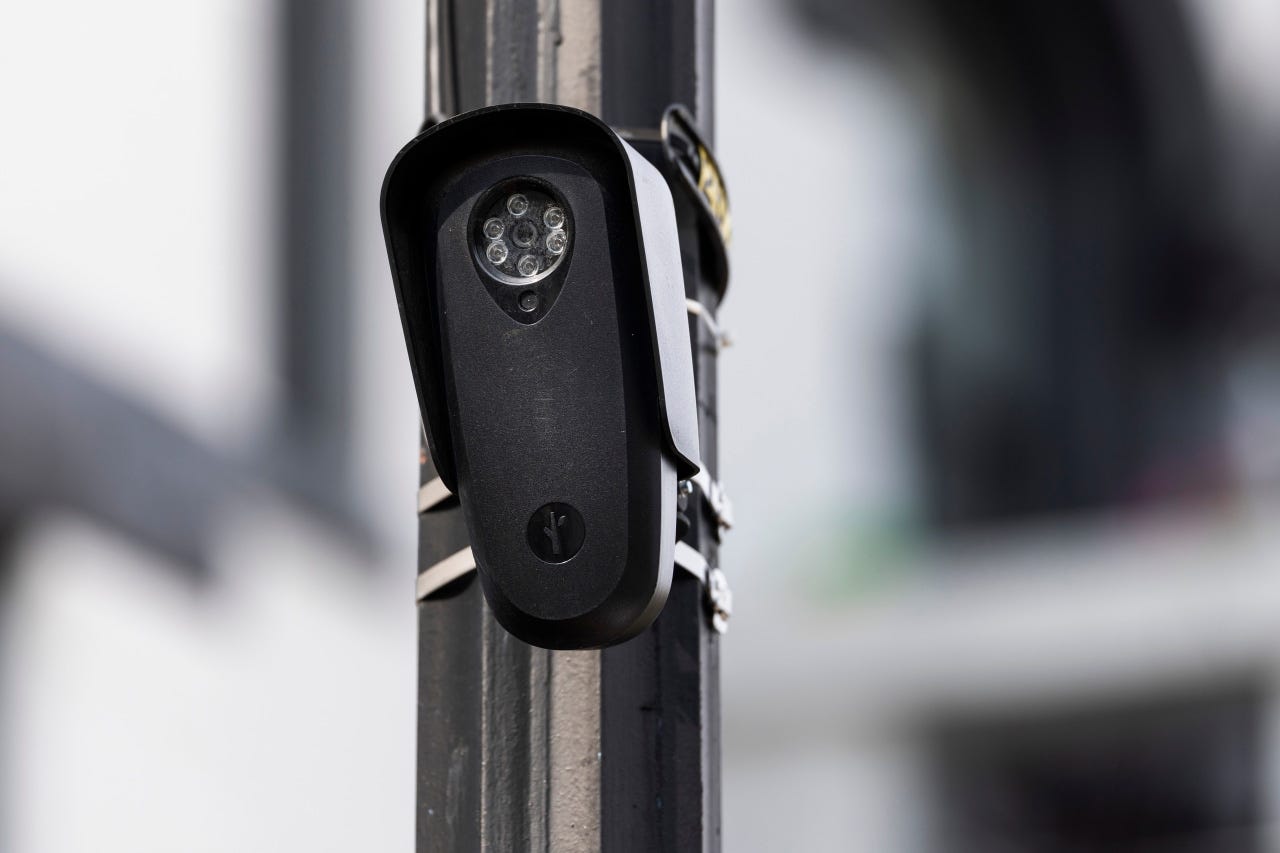
It was a murder that in years past might have gone unsolved. A gang member was alerted to the presence of rivals in a neighborhood claimed by his own gang, an affront that, in the primitive thinking common to gang culture, couldn’t go unchallenged. He drove to where the rivals had gathered and emptied a semiautomatic handgun in their direction, striking one in the head and killing him. A young father and mother, arriving at home with their baby right as the shots were fired, narrowly avoided falling victim themselves. A neighborhood playground, also in the line of fire, was mercifully empty at the time.
The shooting was captured on a security camera, but from such a distance that identifying the shooter or discerning the license-plate number on his car was impossible. Witnesses were unable or unwilling to provide detectives with any more details than were supplied by the security footage. The make, model and color of the shooter’s car were so common in the area that not long ago the information would have been all but worthless.
But thanks to the presence of Flock cameras nearby, my fellow police officers and I had a starting point from which to launch our search. An initial query of the Flock system, which captures images of passing cars and their license numbers, produced several potential matches for the shooter’s car. Further refinements to the search criteria gave us a car that appeared to be the one seen on the security video.
The car’s owner was found to be a gang member whose confederates were known to be feuding with the victim’s gang. When we obtained security video showing him driving from his home shortly before the shooting and returning shortly afterward, we were confident we had our suspect. A search warrant on his cellphone produced location data placing him at the scene when the shooting occurred.
There are many similar accounts of how Flock cameras have led to arrests. Flock claims, not without evidence, that areas where its cameras are installed have experienced lower crime as a result. But as detailed in recent articles in the New York Times, the Washington Post and the Atlantic, Flock and its competitors (Motorola and Axon, among others) have many detractors, some of whom decry what they see as the invasion of privacy by an expanding surveillance state.
Danielle Citron, a University of Virginia law professor, distilled the objections. “We all want, expect and deserve privacy,” she told the Times. “The problem is that we typically cannot feel, see, or experience the loss as it is happening.”
The flaw in Ms. Citron’s argument is that while we may want privacy and think we deserve it, as the law now stands we have no legal expectation of it as we move about in public spaces. If a police officer were to stand at a busy intersection and take a picture of every passing person and car, no one so photographed could raise a valid legal objection. That Flock and others have devised methods to automate the process doesn’t alter the underlying legal principle.
That may change as cases arise and move through the courts. In Riley v. California (2014), the Supreme Court rejected long-held precedent in ruling that cellphones can’t be searched without a warrant, even when seized incident to a lawful arrest. The high court may one day similarly find that widespread use of cameras and automated license-plate readers implicates the Fourth Amendment and impose similar restrictions.
Critics also point to instances in which officers have used the data collected for improper purposes, such as stalking romantic partners. Such abuses can’t be ignored. Police departments can and should institute safeguards, such as periodic audits. Access to these databases should be limited to officers who have been thoroughly vetted. But to deny the police any tool with potential for misuse is to render them powerless.
The suspect in the case described above was convicted by a jury and sentenced to life in prison. It’s conceivable that we could have developed evidence pointing to his identity without the Flock system. Perhaps an informant would have come forward. But local gangs instill such fear in the area’s law-abiding residents that it’s far more likely this murder would have gone unsolved, leaving the killer free to roam and, perhaps, to kill again.
Those who seek to forbid the use of Flock cameras don’t understand what it’s like to live in neighborhoods where fear of such crimes is constant. We can’t allow them to deprive the police of this innovative and lifesaving technology.
Mr. Horan is a police officer in California.
Unless and until there can be complete assurance - if that is even possible - that this technology will not be abused by government powers, they should not be permitted. Can you imagine how these would have been abused during the Covid Controls?
Agree. Community safety is paramount over any [false] privacy claims to public privacy.