

‘Labyrinth’ Still Dances the Magic Dance
At 40, the Jim Henson film remains a wonderfully strange fantasy that lets its heroine grow up without growing up too fast.

Free Expression is a daily newsletter on American life, politics and culture from the Opinion pages of The Wall Street Journal. Sign up and start reading Free Expression today.
“Labyrinth” is a strange movie. It’s delightfully strange, wonderfully strange, but also regular strange: strange like an optical illusion, strange like a dream where all your teeth fall out.
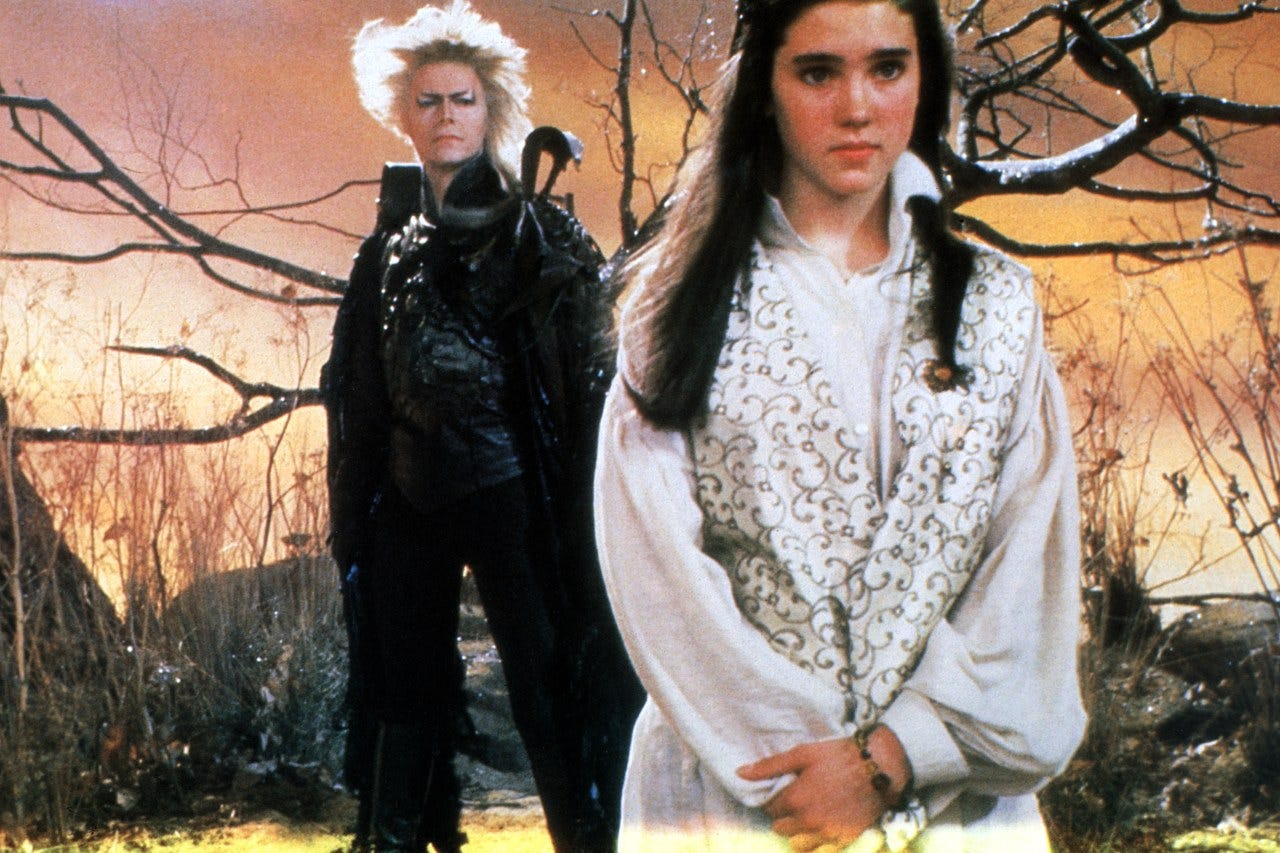
The cult classic, which is nearing its 40th anniversary, was directed by Jim Henson, written by Monty Python’s Terry Jones, and stars David Bowie at the height of his powers—and in some very tight pants. The result is what you’d expect from those three names together: a muppety, synth-packed, oddball fantasy that swings wildly between childlike whimsy and adult danger.
The film starts in the real world, where Sarah, played by then-14-year-old Jennifer Connelly, is being forced to babysit her infant half-brother Toby. Annoyed by Toby’s constant crying, Sarah petulantly wishes for the goblins from her favorite book, also called “Labyrinth,” to take Toby away. The goblins grant her wish, and Jareth, the Goblin King (Bowie), informs her that the only way to get the baby back is to solve his massive maze. If she fails, Toby becomes his forever.
Despite Jareth’s evil intentions, the labyrinth is filled with more friends than foes. A kindly, scarf-wearing worm helps guide Sarah into the maze. A grumpy dwarf named Hoggle overcomes his professed cowardice to come to Sarah’s rescue on several occasions. Upon freeing a ferocious beast being tortured by some goblins, Sarah gets help from some much-needed muscle. Even creatures who at first seem menacing are eventually revealed to be merely silly. A giant metal monster is in fact controlled by a wimpy, confused goblin. The scary stone faces that fill a cavern and mournfully warn Sarah to turn back before it’s too late are easily rebuked. “Sorry, just doing my job,” one of them sheepishly replies to a dismissive comment from Hoggle.
There are a few genuinely creepy moments. The time Sarah falls down a tunnel made of talking human hands always scared me as a kid. She also narrowly escapes a gang of feather-covered fire monsters who are intent on taking her head off. But the true danger of the labyrinth is more psychological than anything else. Sarah must contend with the danger that lies at the precipice of childhood and adulthood, the fear that comes from not knowing whether you’re growing up too fast or staying too long in the cocoon of girlhood comforts.
At one point, Sarah finds herself dancing with Jareth during a dreamlike masquerade ball. The scene is oddly romantic—a lot of intense eye contact is involved—and when Sarah escapes, she finds herself in a junkyard that contains a perfect replica of her childhood bedroom. Freighted by a brush with what can only be described as adult sexuality, Sarah nearly caves to the temptation to burrow away into the safe, comforting world of her childhood toys, forgetting her brother.
Thankfully, she snaps out of it. Upon finally making it to the castle, Jareth attempts to persuade Sarah to give up her brother with the language of an abusive boyfriend. “I ask for so little, just let me rule you, and you can have everything you want,” he pleads. “Just fear me, love me, do as I say and I will be your slave.” Sarah rejects him, and everyone gets home safely.
The only films that really compare to “Labyrinth” are those made by Japanese animator Hayao Miyazaki—especially “Spirited Away” and “The Boy and the Heron.” Mr. Miyazaki’s fantasy worlds are just as rich as Henson’s. But while “Labyrinth” is a cuddly muppet production with a surface layer of danger, Mr. Miyazaki’s fantasy worlds are often filled with a real malice, only disguised with a veneer of whimsy.
“Labyrinth” is better off for staying on the lighter side of a story about a dark maze and a lascivious goblin king. The film is a coming-of-age story that doesn’t jolt its heroine into full adulthood. Sarah grows beyond her selfishness and fixation with her childhood trinkets, but she isn’t quite ready to be a woman. She still wants access to her dream world and goblin friends. Sarah still has her head in the clouds. But by film’s end, her feet are on the ground, too.
Ms. Camp is senior newsletter editor at Free Expression.
If you want to pursue this track, I strongly recommend The Dark Crystal.