

Shoot for the Moon
Artemis II is an important step toward returning astronauts to the lunar surface.

By James B. Meigs
Free Expression is a daily newsletter on American life, politics and culture from the Opinion pages of The Wall Street Journal. Sign up and start reading Free Expression today.
Three enormous parachutes will open over the Pacific Ocean on April 10 and, God willing, bring the Artemis II mission’s Orion capsule to a gentle but historic splashdown. No vehicle has ever carried humans so far from home. When the hatch opens, the mission’s four crew members will emerge as celebrities, the kind of celebrities the world needs today.
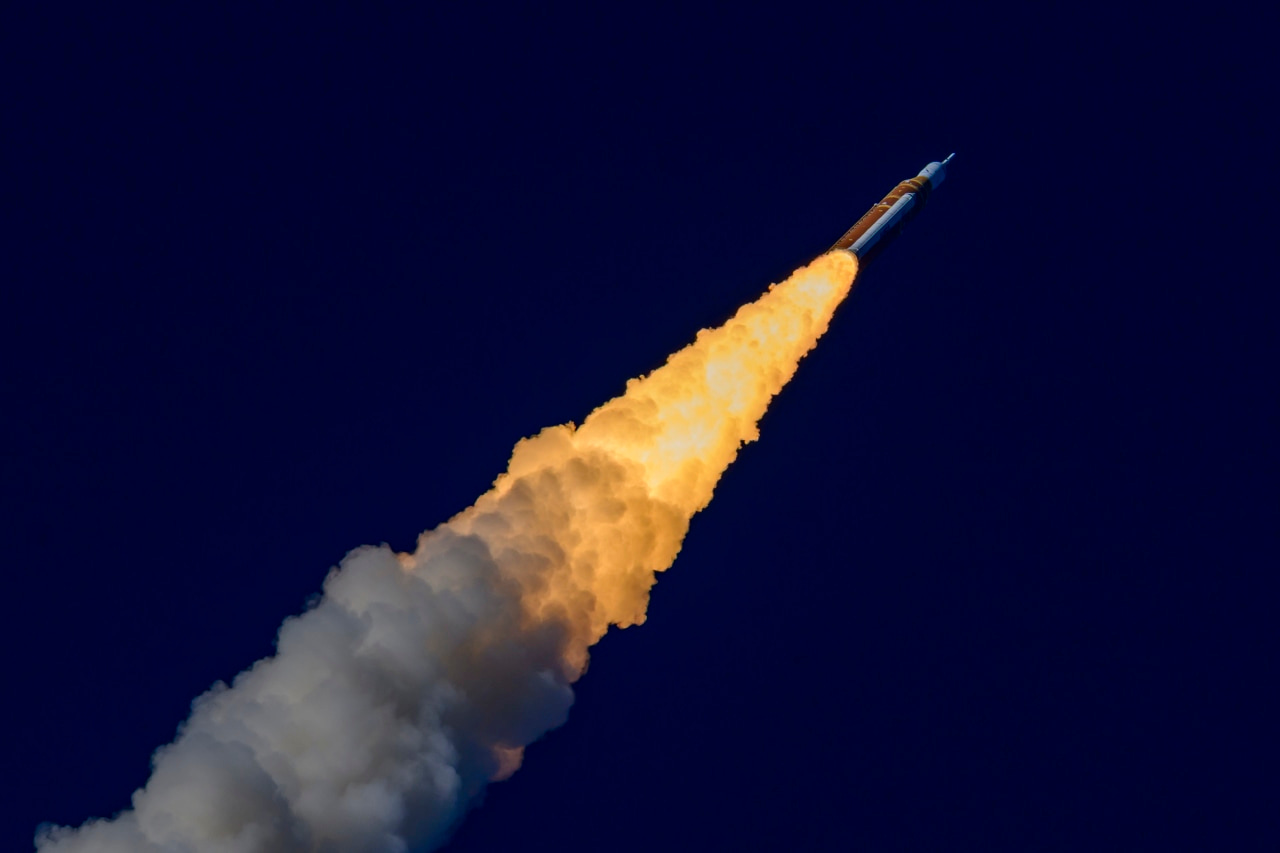
Commander Reid Wiseman, pilot Victor Glover, NASA astronaut Christina Koch and Canadian Space Agency astronaut Jeremy Hansen will be feted as heroes. And for good reason. Their mission required real skill, years of training, and, let’s face it, enormous courage. Artemis II was essentially a test flight, the first crewed mission flying the massive Space Launch System rocket and Orion space vehicle. Both rocket and capsule have faced serious safety issues on the long road to this flight. A safe return wasn’t guaranteed. Indeed, the spacecraft must still endure the blistering re-entry into Earth’s atmosphere, when the capsule’s heat shield will reach temperatures of 3,000 degrees Fahrenheit.
If all goes well, the Artemis II mission will be only one step in a plan to land astronauts on the lunar surface as early as 2028. Even before that date, NASA wants to start landing robotic probes that will give us a head start in building a long-term base on the moon.
I think this is a big deal. But not everyone agrees. Many wonder whether going back to the moon is worth the cost. According to a 2023 Pew Research poll, only 12% of U.S. adults think NASA should prioritize putting astronauts back on the moon. Even in the heyday of the Apollo program, less than half of all Americans thought the lunar effort was worth the money. Today, each launch of the SLS rocket costs more than $4 billion. Couldn’t those funds be better spent here on earth? More broadly, do we really need human astronauts at all?
Those are valid questions and I think voters deserve an answer. Yes, we should go back to the moon, and yes, we need astronauts, not just robots, in space. Here’s why.
First, manned spaceflight is in our geopolitical interests. Low-Earth-orbit is already the site of crucial economic activity. Imagine life without GPS satellites. Eventually, the moon will be as well. The day may come when a global competitor tries to deny our access to these regions. China is aggressively building its space program and aims to land its taikonauts on the moon in 2030. The best way to forestall open conflict is for the U.S. to maintain a peaceful presence, both manned and unmanned, in orbit and on the moon.
The U.S. has always emphasized the need for peaceful coexistence in space. Remember, “We came in peace for all mankind”? But the moon’s best real estate is limited. Only a handful of spots around the lunar south pole offer both steady sunlight and potential access to deposits of water ice, two crucial resources for a long-term base. We can share those regions with other visitors. But things might get dicey if a hostile nation (like, cough, China) were to set up shop and then claim exclusive rights. Our best bet is to get there first.
Second, we need to maintain American leadership in the growing space economy. Right now, U.S. companies dominate the satellite and space-launch business. Last year over half of the world’s space flights were launched by SpaceX. Private capital is pouring into commercial space ventures. NASA has played a crucial role in catalyzing these innovations, for example by hiring SpaceX to fly cargo and astronauts to the International Space Station.
It’s true that the SLS rocket used to launch Artemis missions is far too expensive. That problem was largely forced on NASA by Congress, whose members fight to keep SLS money flowing to their states. But America’s burgeoning private space sector holds the solution. NASA Administrator Jared Isaacman has outlined plans to phase out SLS and replace it with new space vehicles built by SpaceX, Blue Origin and other private vendors. This move would slash costs while allowing more frequent and flexible missions. Now Congress needs to step back and let him do it.
Mr. Isaacman also recently fleshed out a detailed plan for a lunar base. This program will rely on public-private partnerships to help build “permanent infrastructure necessary to sustain a human presence,” he said. By working with private vendors, NASA can bring down the costs of colonizing the moon and help seed new innovations and industries.
Third, we must keep seeking knowledge. The U.S. leads the world in space science, in part because of NASA’s space telescopes and robotic explorers. Those unmanned missions should continue. But a human presence on the moon offers the chance to learn more, not just about how our solar system formed, but about the human species itself. How do our bodies handle the harsh lunar environment? How can we help explorers thrive on eventual missions to Mars and beyond?
The final reason is the most intangible, but perhaps the most vital. A robotic probe can gather data. But it can’t engage the rest of us on Earth like seeing the crew of Artemis II choke up and embrace while naming a lunar crater after the mission commander’s deceased wife.
Exploration is part of the great human adventure. Our ancestors ventured to every corner of the globe. That willingness to take risks is one reason our species survives. And curiosity about what’s beyond the next bend is part of what makes us human. Today we are becoming a spacefaring people. Let’s make sure Americans keep leading the way.
Mr. Meigs is a Free Expression columnist at WSJ Opinion.