

Windmills Can’t Handle the Wind
Powerful gusts crushed turbines in South Dakota, illustrating the intermittency problem plaguing renewable wind energy.

Free Expression is a daily newsletter on American life, politics and culture from the Opinion pages of The Wall Street Journal. Sign up and start reading Free Expression today.
What happens to renewable wind energy when wind blows down windmills? The net environmental gains of wind power are already dubious, once the costs of construction and eventual disposal are factored in, to say nothing of the government subsidies on which it relies. Even the net energy gains aren’t simple calculations. That wind is intermittent means windmills require a backstop of coal or natural gas plants, and the footprint per generated kilowatt is vastly larger than a nuclear plant’s. Along the way, windmills are noisy, visually intrusive and slaughter migratory birds.
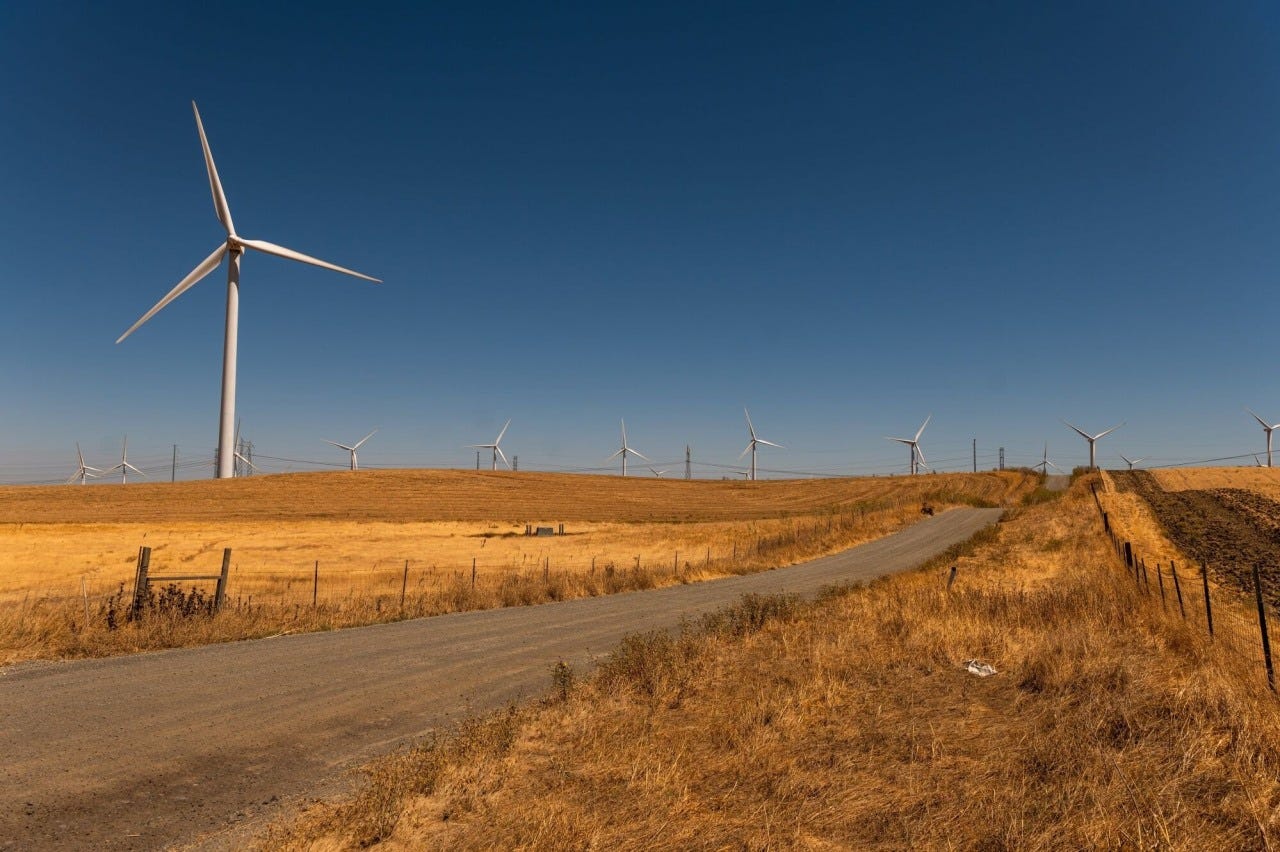
And, we’ve recently learned, they also blow down. At 6:25 a.m. on June 29, on the South Dakota prairie near the town of Highmore, the wind reached 131 miles an hour and destroyed more than 20 windmills. According to the Energy News Beat service, wind turbines are engineered to withstand three-second gusts of more than 144 mph, but the 131 mph straight-line prairie winds defeated them, causing broken-off turbine blades and crumbled towers.
Last week’s weather was atypical. The 131 mph gust is the highest nontornado wind speed recorded since 1983, the 15th-strongest thunderstorm wind gust ever recorded in the U.S. and the second-highest gust in the state, according to South Dakota News Watch. The damage in Highmore was extensive. The roof of St. Mary’s Catholic Church was split in half. A storefront in the town was destroyed. Power lines came down. Grain silos were crushed. Trees fell on homes. But the most striking visuals, a cruel irony, are the flattened windmills, unable to handle the wind.
Among American states, South Dakota ranks 14th in wind-energy production. And Highmore is home to several commercial windmill farms, including one that, at full capacity, can generate power for roughly 12,000 homes. The Midwest these days is peppered with windmills, turning slowly and killing birds. Building hundreds of turbines near densely populated areas is difficult, with politically active residents ready to rise up against the noise, ruined views and diminished land values. Out in the countryside, farmers and ranchers can earn lease payments from wind developers while continuing to grow crops or raise livestock.
At least until the wind blows too much or too little. “The intermittency problem has thus far been one of the largest impediments” to wind power, a 2023 Georgia Institute of Technology paper dryly noted. Wind “is highly variable due to random changes in wind speeds,” the authors added in a 2025 paper. A 2017 Applied Energy essay put it simply: “intermittency poses serious impacts on power systems,” and “these impacts become more prominent with increasing wind-power penetration level.”
“You are in a life-threatening situation,” the National Weather Service warned ahead of Monday’s South Dakota wind storm. “Flying debris may be deadly to those caught without shelter. Mobile homes will be destroyed. Expect considerable damage to homes and businesses. Expect extensive tree damage and power outages.” The windmills out in Highmore, S.D., won’t be helping with those power outages.
Ms. Bottum is an assistant editorial features editor at the Journal.
 | A guest post by
|
The author's claim:
>
Even the net energy gains aren’t simple calculations. That wind is intermittent means windmills require a backstop of coal or natural gas plants
<
The author fails to mention battery backups. California, for example, faced urgent appeals for conservation a few summers ago, has been able to eliminate shortfalls through battery backup.
Furthermore, wind power generates nearly one-quarter (23% to 24%) of Spain's total electricity--and unlike other countries in Europe, the run-up in energy prices during the Iran war barely affected them. And the author omits the externalities of coal or natural gas plants--contribution to global warming and toxic air pollution which kills millions prematurely.
Finally, windmills can now be designed to handle greater wind gusts. The fact that there were design flaws in a particular set no more offsets the applicability of wind power than Three Mile Island negates the use of nuclear power. Any technology needs a learning curve.