

Mac Barnett, Come on Down
You’re the next contestant on ‘Cancel the Straight White Male.’

By Meghan Cox Gurdon
Free Expression is a daily newsletter on American life, politics and culture from the Opinion pages of The Wall Street Journal. Sign up and start reading Free Expression today.
You might think that the world of children’s books is a warm and cozy place. You might think that people in the industry wish, by means of written and visual artistry, to spark imagination and open the flashing beauty of the world to young readers. If you think it should be this way, you’re right. But if you think it is, you’re wrong.
Contemporary children’s literature is one of the most rancorous, venomous, grifter-ridden fields of battle in American culture. It’s full of people trying to push leftist dogma. It’s full of saccharine stories illustrated by computerized slop-art. The place seethes with woke-era resentments that occasionally burst into social-media witch-burnings when a writer, illustrator or agent commits thoughtcrime.
In fact, there’s a fellow in flames right now. More on him in a moment.
Meanwhile, book-wise, a tremendous, unbelievable, staggering amount of pious, preachy dross gets published. For 20 years I covered children’s books for the Journal, a job that entailed unboxing hundreds of books every month. My family became well-acquainted with cries of disgust and indignation emanating from my office. During peak woke, the onslaught of left-wing hagiography was so unremitting that Ruth Bader Ginsburg was offered as a heroine for pint-sized readers in no fewer than six picture books and, in 2018 alone, Sonia Sotomayor was the subject of three. There were endless handbooks for young revolutionaries (with fists in the air) and catechisms about identity, sexuality, skin color, the evils of police and the awesomeness of girls and women. You wouldn’t believe the fawning fatuity of kiddie books about Hillary Clinton, Kamala Harris and, of all people, Stanley Ann Dunham, the mother of Barack Obama. And don’t get me started on the cheap, ugly artwork and the endless lecturing about sharing, kindness and acceptance.
And yet! There were many glints of gold amid the chaff: clever, witty, touching books that were gorgeous to look at and delightful to read. Thus, yelps of dismay weren’t the only ones my family noticed. They also heard the occasional shout of triumph. I loved telling Journal readers about the great books I found. Some would become part of the enduring body of children’s literature, I hoped, though it’s a high mark to reach. You and I might differ on what, exactly, distinguishes greatness, and we all have our quirky favorites, but I suspect that we can agree that great books are compelling, have a quality of universality and are, at some level, truthful. Good books teach moral lessons, but they don’t moralize. The thing about great children’s books is that you can read them (or look at their illustrations), again and again, and always come away feeling refreshed.
Most books possess nothing like that power, because most books aren’t especially good. Does that strike you as a heinous observation? Of course it doesn’t. Most of anything—art, architecture, food, journalism—isn’t especially good. As the sci-fi writer Theodore Sturgeon once said of his own genre: “Sure, 90% of science fiction is crud. That’s because 90% of everything is crud.”
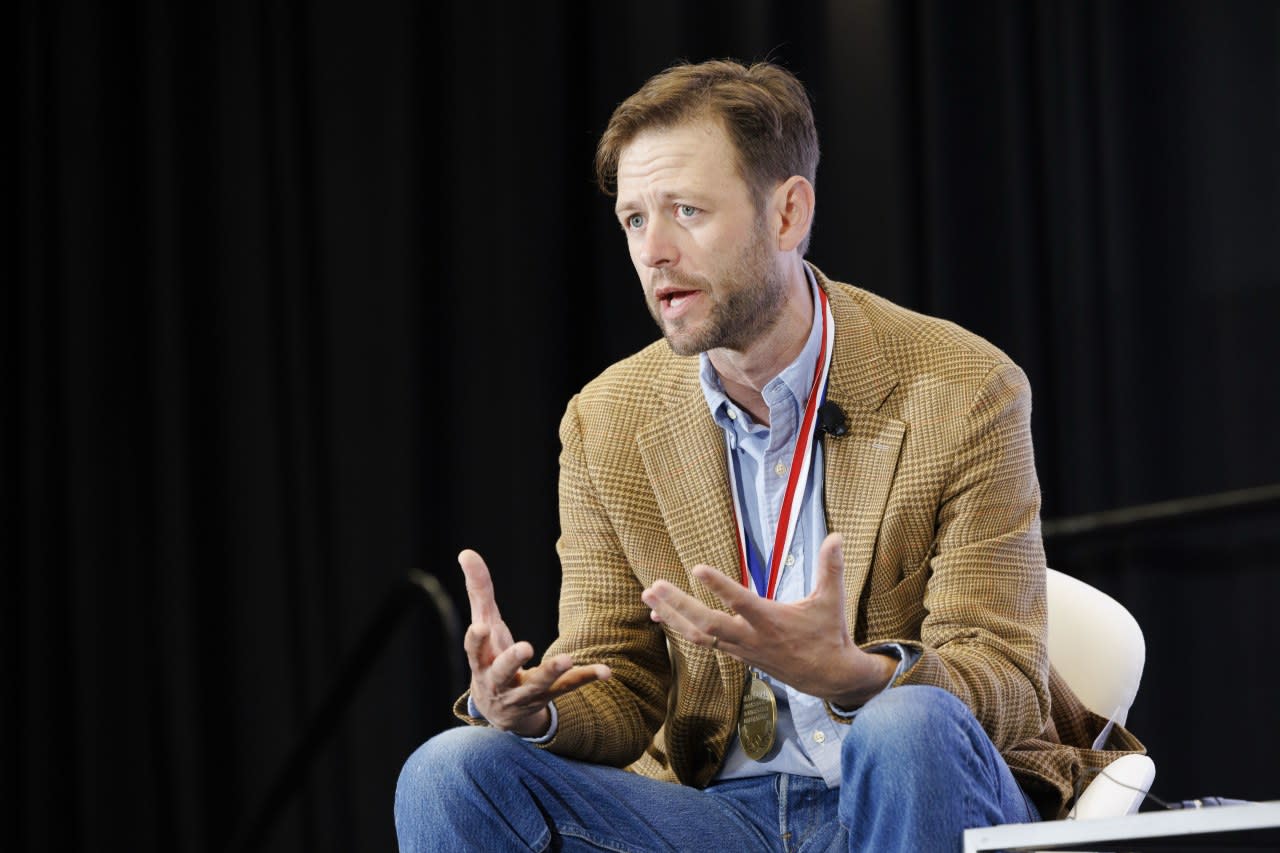
All of which brings us to today’s burning man. Mac Barnett is a talented children’s author whom the industry used to love. Now people hate him. There’s been a tempest online and colleagues are calling for his head because he has said a true thing.
In an essay collection for adult readers, “Make Believe,” published a week ago, Mr. Barnett called out the imagination-killing didacticism of too many kids’ books. Further, he adverted to Sturgeon’s dictum about the cruddiness of 90% of everything. “I have a nagging fear that children’s literature suffers from a slightly higher crud percentage than literature as a whole,” he wrote. “So I now offer Barnett’s Addendum to Sturgeon’s Law: Maybe more like 94.7 percent of kids’ books are crud.”
O, what a wailing and gnashing of teeth has ensued! But here’s the tell. Apart from bemoaning didacticism, Mr. Barnett didn’t call out any specific type of book. He didn’t inculpate any type of writer, illustrator or publishing house. Yet look who imagines themselves the target.
Using language straight from the wildest days of online mobbing, an array of leftie kidlitterati issued an open letter asserting that Mr. Barnett’s observation causes “incredible harm.” Particularly injurious was his use of the word “didacticism.” Why? Not because homiletics are boring for children and risk turning them off books and reading. No, the signatories don’t like the word “didacticism” because, as the letter explains: “For Black and brown authors, for queer and trans authors, we have seen that very word used as a cudgel and dog whistle to decry the necessary diversification of children’s literature.”
An article in the industry organ School Library Journal lays it out more fully: Mr. Barnett’s comment is “particularly problematic to the community of BIPOC and LGBTQIA+ authors and illustrators who have pointed out that Barnett, a straight white man, seems to not only consider himself the arbiter of good and not in children’s literature, but discounts the struggles of marginalized communities currently under attack by book banners and how much more difficult his words have made it for them.”
On social media, agitated persons have demanded that Mr. Barnett resign his position (or be sacked by the Library of Congress) as the 2025-26 National Ambassador for Young People’s Literature. Mr. Barnett, for his part, has fallen over himself in trying to douse what School Library Journal calls a “firestorm.” In a statement to the outlet, the poor man wrote, “I want to acknowledge the passage I wrote is hurtful, especially to people who work hard making books for kids. I understand why people are upset and feel betrayed. In trying to make a point, I got hyperbolic and glib. I was wrong. I’m truly sorry.”
I’m sure he is sorry. No one likes to be abused online. No good-hearted person wishes to hurt others. Mr. Barnett’s picture books—which include 2014’s “Sam and Dave Dig a Hole,” illustrated by Jon Klassen, and his recent collaboration with illustrator Carson Ellis, a retelling of “Rumpelstiltskin”—show him to be a highly literate storyteller with a puckish sense of humor.
But sorrow doesn’t make Mr. Barnett mistaken. He invented that percentage, but he hit the spot. The histrionic reaction to his observation reveals the guilty consciences of people who know deep down that they’re pushing shoddy work—shoddy art, shoddy thinking, shoddy politics—on readers who are too young to know better.
Mrs. Gurdon is a Free Expression columnist at WSJ Opinion.
I'm sorry he apologized. And it's just ridiculous to try to make this about race...
By the way, you forgot to include the author's name for this piece!