

Rolling in the Deep
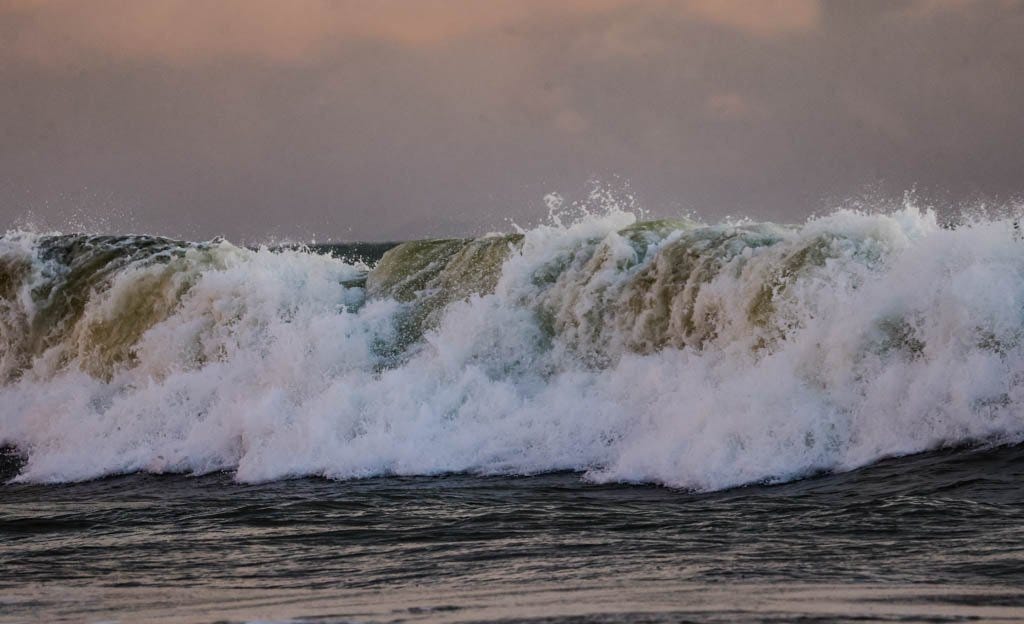
Trump is a rip current pulling even strong swimmers out to sea.

Good morning. Welcome to Free Expression, a daily newsletter on life, culture and politics from WSJ Opinion.
If someone forwarded you this email, please take a moment to subscribe. You can follow us on X/Twitter, Instagram and Substack.
Today in Free Expression, columnist Matthew Continetti argues that businesses should celebrate America’s 250th birthday without shame; Emma Camp asks why so many students are getting disability accommodations; and Mary Julia Koch implores Gen Zers to stop texting and have an old-fashioned phone call.
But first, a walk on the beach . . .


Dead Reckoning
—Matthew Hennessey
There is a kind of integrity associated with changing your mind. Along comes a new idea, or a unique set of circumstances, and you adjust. It’s normal, in the John Maynard Keynes vein: “When the facts change, I change my mind. What do you do, sir?”
But there’s something to be said for sticking to your principles, if you have any. It’s admirable to stand firm as events conspire to undermine your beliefs and commitments. Winds shift. Tides go out as quickly as they come in. Things that aren’t tied down, or rooted in a firm foundation, are easily pulled to sea.
The first Donald Trump administration was a rip current. It dragged many strong swimmers into deep political waters. Some cursed those who tried to help them back to dry land. They spat at friends and swatted at former colleagues. “We’d rather drown than reach for your hand,” they sputtered.
“OK,” came the reply. “Have it your way.”
Some who were swamped and struggling accepted life rafts from one-time rivals. Others built their own barques, delighting in the buoyancy provided by fresh money and strange new respect. They sailed off into the false sunset of the Biden interregnum, singing sailor songs and sea shanties: “Way, hay, and up she rises! Kamala will steer us home.”
Still others tried to ride the big waves, or surf them, and found themselves driven hard below the surface. Some woke up shipwrecked on islands with names like Industrial Policy, Protectionism, Antisemitism and Russia. Now, years gone by and beards grown long, they are stranded in these cheerless places, stuffing notes into bottles, with no obvious way to get back home.
Not everyone let himself go. Not everyone got pulled under or tossed in the tide. While some exhausted themselves by fighting the current, some swam parallel to the shore until free of the pull, then made their way slowly and deliberately back to the beach.
“That was a wild ride,” they said. “But we survived. Home and dry.”
Here, in the second Trump administration, storms are once again raging. Powerful waves are reshaping the shoreline. Turbulent cross currents are roiling Those who never learned to swim are being dragged to sea. Those who thought they could command the tides are learning humility.
It’s good to keep an open mind. It’s useful at times to go with the flow. But it’s important to pace yourself, to keep an eye on the shore. Because some things don’t change. Some things are permanent.
We’re still here. Unsinkable. Home and dry.

Minimum Wage, Maximum Pain: Politicians in California, that paragon of responsible governance, imposed a $20 minimum wage for fast-food workers starting in 2024. The results have been predictable, and in fact were predicted, by those who understand economics. A working paper from economists at the University of California, Santa Cruz found that the new policy has led to “higher menu prices for consumers, reductions in employee working hours, widespread elimination of overtime, and loss of benefits for employees.” It’s also driving further automation of the industry. To repeat this lesson, for anyone still willing to doubt it: Increasing the minimum wage cuts off the lower rungs on the economic ladder, harming the very people it’s supposed to help. How many times do policymakers have to learn this? — Jack Butler
Ruh-Roh!: New Yorkers are growing tired of irresponsible dog owners. Complaints about canines in cafes, grocery stores and the subway abound. So, too, do complaints about dog owners who fail to pick up after their pets. Curbed reports that in January and February alone New Yorkers made more than 1,500 calls about dog waste to the city’s nonemergency service hotline. Technically, much of this behavior isn’t only obnoxious, it’s illegal. But fines are rare. Some dog owners justify their boorishness by pointing the finger at the parents of young children. How come a 70-pound golden retriever isn’t allowed in a restaurant but a cranky toddler is? That’s easy. Because toddlers are human beings. — Emma Camp

SPQR-15: Could a battalion of U.S. Marines beat a Roman legion? The fun comes from teasing out the advantages of modern technology vs. sheer numbers. But archaeologists at Italy’s University of Campania have found evidence that the Romans were more advanced than we thought. Clustered markings in stone at Pompeii suggest the use of a weapon called a “polybolos.” A study in the journal Heritage describes it as a “repeating dart-throwing weapon” or “automatic catapult” that used mechanized gears to launch multiple projectiles quickly, a striking predecessor to modern weaponry. Accounts of the polybolos had appeared in ancient texts, but this study provides some of the best attestation yet of its actual use in battle. And some people think history is boring. — J.B.

America Is the Best Brand
Matthew Continetti

America’s founding philosophy and political economy are connected. The Declaration of Independence was published the same year as Adam Smith’s “The Wealth of Nations.”
Both assert that free and equal people have the right to enjoy the fruits of their labors—including property. American prosperity isn’t an accident. It’s the direct consequence of 1776.
Read Matthew’s Column ⧁
Are You ‘Disabled’ or Just Bad at Math?
Emma Camp
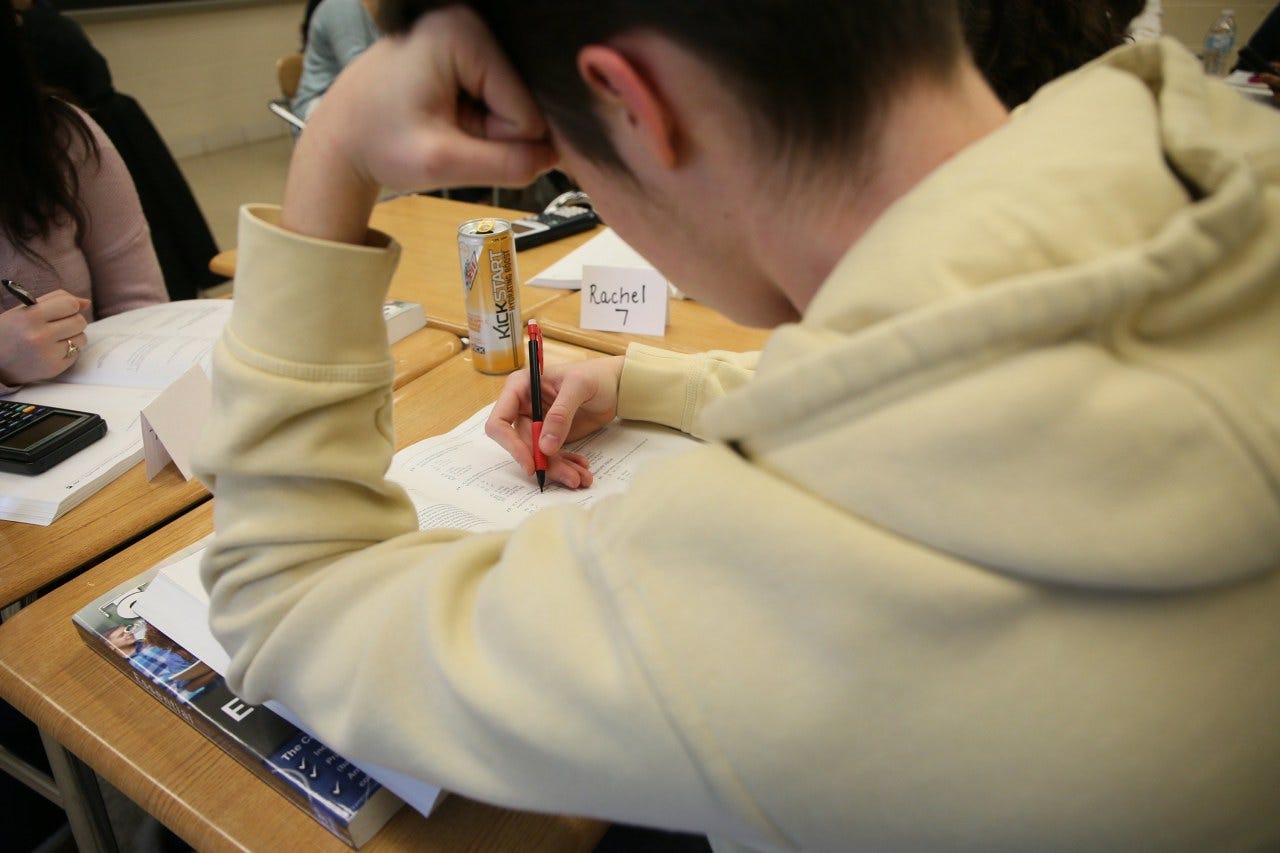
Some students need classroom accommodations. But the line between a student struggling with a genuine impairment and a student who can’t hack it in AP calculus is thin and highly subjective.
Read Emma’s Article ⧁
Don’t Text, Please Call
Mary Julia Koch

Any effort to pull young people out of their digital shells is laudable. But reading an advice book isn’t going to cut it. At some point it requires a leap of faith—or even the small step of a phone call.
Read Mary Julia’s Article ⧁
About Free Expression
Free Expression is a daily newsletter on American life, politics and culture from the Opinion pages of The Wall Street Journal.
Published directly to your inbox Monday through Friday, Free Expression features news and commentary from WSJ Opinion editors, regular columnists and other contributors.
Sign up and start reading Free Expression today.