

Garth Brooks’s Answered Prayers
He could become the $2 billion man.


Good morning. Welcome to Free Expression, a daily newsletter on life, culture and politics from WSJ Opinion.
If someone forwarded you this email, please take a moment to subscribe. You can follow us on X/Twitter, Instagram, Substack and TikTok.
Today in Free Expression, columnist James B. Meigs wants more rocket men; Dominic Green reports on the latest crime tearing Britain apart; and Howard Husock describes the surprising effect homeownership can have on our politics.
But first, he’s got friends in high places . . .


Big Money
—Matthew Hennessey
Country music superlegend Garth Brooks is reportedly considering letting go of his considerable catalog of songs and recordings for as much as $2 billion. A wallet that fat is going to be awfully hard to hide in such tight jeans.
Maybe he’s simply talking his book, as they say on Wall Street, but that price tag sounds borderline insane to me. Mr. Brooks is a big, bankable star, no question. But consider the paydays other top-selling artists have reportedly gotten for their catalogs.
Bob Dylan: $300 million (2020)
Paul Simon: $250 million (2021)
Bruce Springsteen: $550 million (2021)
Michael Jackson: $750 million (2024)
Queen: $1.2 billion (2024)
(Before you scream “shamone” about the Jackson deal, it was only for half of the King of Pop’s catalog, putting the estimated value of the whole thing at $1.5 billion.)
Looking at all the numbers side-by-side, something feels off. Every deal is different—songwriting and recording royalties are a complicated business. But there’s an obvious question to be asked: Is Mr. Brooks’s catalog, impressive as it is, really more valuable than the collected works of these artists, who are by any definition more mainstream than he is? Are Mr. Brooks’s songs more valuable than the songs of Messrs. Dylan, Simon and Springsteen . . . combined?
That strikes me as a huge stretch. Personally, I’d have a hard time naming more than a handful of Mr. Brooks’s songs. I know “Friends in Low Places,” which is probably his biggest hit. But Mr. Brooks didn’t write “Friends in Low Places,” so whoever ends up buying his catalog would get only the rights to his recording of that song, not to the publishing. As anybody who follows this stuff will tell you, the publishing is always where the real money is.
If pressed I could easily come up with “The Dance.” That’s also not a Mr. Brooks composition, so there’s likely no publishing money on the table with that one either. I recall that Mr. Brooks recorded a popular cover of the Billy Joel song “Shameless.” Finally there is “The Thunder Rolls,” which Mr. Brooks co-wrote.
Google tells me that there’s also “If Tomorrow Never Comes,” a smash hit for Mr. Brooks in 1989. I was plugged into popular music in those days. I confess that wasn’t on the turntable at my high-school dances in Northern New Jersey.
I love country music, but the circumstances of my birth and upbringing mean it doesn’t come naturally to me. It was an acquired taste. Which makes me wonder if I might have a version of the Pauline Kael problem. Maybe I have a blind spot. Sitting here with my New Jersey accent in my air-conditioned, high-rise office overlooking 6th Ave., maybe I’m out of touch with the sensibilities of the cradle country music fan. Maybe I have no idea how widely adored, revered and commercially viable Garth Brooks remains.
You tell me.
If Mr. Brooks does get $2 billion for his catalog, some will credit his unorthodox streaming strategy. He inked an exclusive deal with Amazon Music in 2016 but deliberately kept himself off platforms like Spotify and Apple, a decision that led some industry watchers to warn that he was potentially damaging his legacy. The world moves on. If you aren’t in the places where people find and listen to music, they’ll forget about you.
When and if this deal goes down, expect those skeptics—and more than a few artists and managers—to re-evaluate the conventional wisdom about digital brand management.
Many urban so-called sophisticates—this one included—remember the shockingly impressive turnout for Mr. Brooks’s 1997 free concert on the Great Lawn in Central Park. That was an eye-opener. In New York City, a place historically not that interested in country music, an ocean of fans showed up for a Tulsa king in a 10-gallon hat on a hot Thursday night. The exact size of the crowd that night is disputed. The NYPD called it 300,000—max. Mr. Brooks, showman to his bones, boasted of a million.
You can look up the video on YouTube. It was impressive. But that was almost 30 years ago. It’s hard to believe that those fans are still as in love with Mr. Brooks today as they were then. And even harder to believe that his music catalog will be more valuable tomorrow—and into the future—than those of other top artists who remain household names.
I think Mr. Brooks is wise to sell up while there’s still a market for his songs. Sometimes tomorrow never comes.

Precrime Time: The world has already seen how the Chinese government treats politically inconvenient citizens: censorship, imprisonment, torture and worse. But these fates are reserved for people after they have already committed a “crime.” What about before? Researchers at Vanderbilt University have gotten their hands on leaked documents from Chinese companies that supply surveillance technology to the government. These firms are using artificial intelligence to develop the capacity to “flag potential threats for suppression before dissent emerges”—that is, to pre-empt possible dissidents before they’ve even done anything wrong. These companies would, of course, pass this know-how on to the government. If you needed another reason to find the Chinese model worrying, here it is. — Jack Butler
Tuna Meltdown: Police in Myrtle Beach, S.C., arrested one of their own for allegedly drawing his department-issued firearm and pointing it at a fellow cop. The alleged victim, a junior patrolman, had done the unthinkable: He’d used the office microwave to heat up fish. This brouhaha could have been avoided with a combination of common sense and common courtesy. Now justice must take its course. Honestly, everybody here sounds guilty. — M.H.

Summa Cum Claude: A new paper finds that two-thirds of college students at major U.S. research universities regularly use AI tools. STEM students rely on AI the most. In fields like computer science and math LLMs can help crunch vast quantities of code. More worryingly, 1 to 10 AI-loving students say they use it to cheat, especially in fields like economics and journalism (whomp whomp). And that’s only counting the kids who are willing to admit to it on surveys. The findings highlight the brutal irony at the heart of Gen Z’s relationship with AI: While zoomers are understandably anxious that this powerful technology could replace them in the workforce, they’re using it more than ever in the classroom. The more that young people outsource their own brainpower, the more likely this fate could come true. — Mary Julia Koch

There’s No Substitute for SpaceX
James B. Meigs

SpaceX carries the lion’s share of all space launches, public and private. A competitor would ease the current shortage in launch capacity.
Last week’s Blue Origin explosion leaves the whole industry holding its breath instead.
Read James’s Column ⧁
Britain’s Reverse George Floyd Moment
Dominic Green

The age of George Floyd ended as it began, with a scuffle in the street and the dying man saying, “I can’t breathe.” Those words were recorded on a police bodycam on Dec. 3, 2025, in Southampton, U.K., as Henry Nowak bled to death from five stab wounds from the Sikh ceremonial dagger carried by Vickrum Digwa.
Read Dominic’s Article ⧁
Home Is Where Your Politics Are
Howard Husock

Owning a home gives you a stake in what we used to call “the system”—the benefits of savings, investment and doing your part to keep a community healthy, not to disrupt or overthrow it.
Read Howard’s Article ⧁

Caro Claire Burke Has a Problem With Women
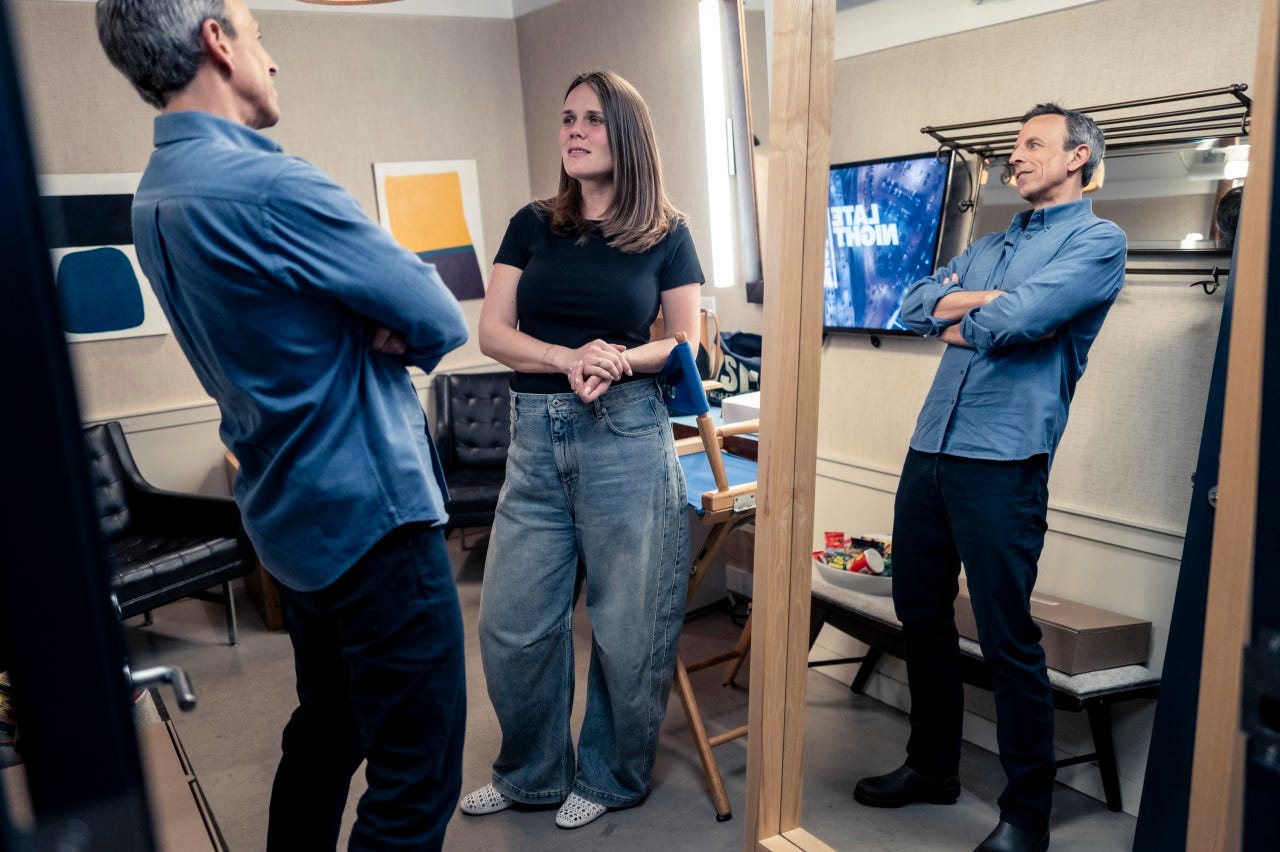
‘Yesteryear’ is a woman-hating revenge fantasy that has found an audience among women.
By Louise Perry
Senate Republicans Find Their Spines
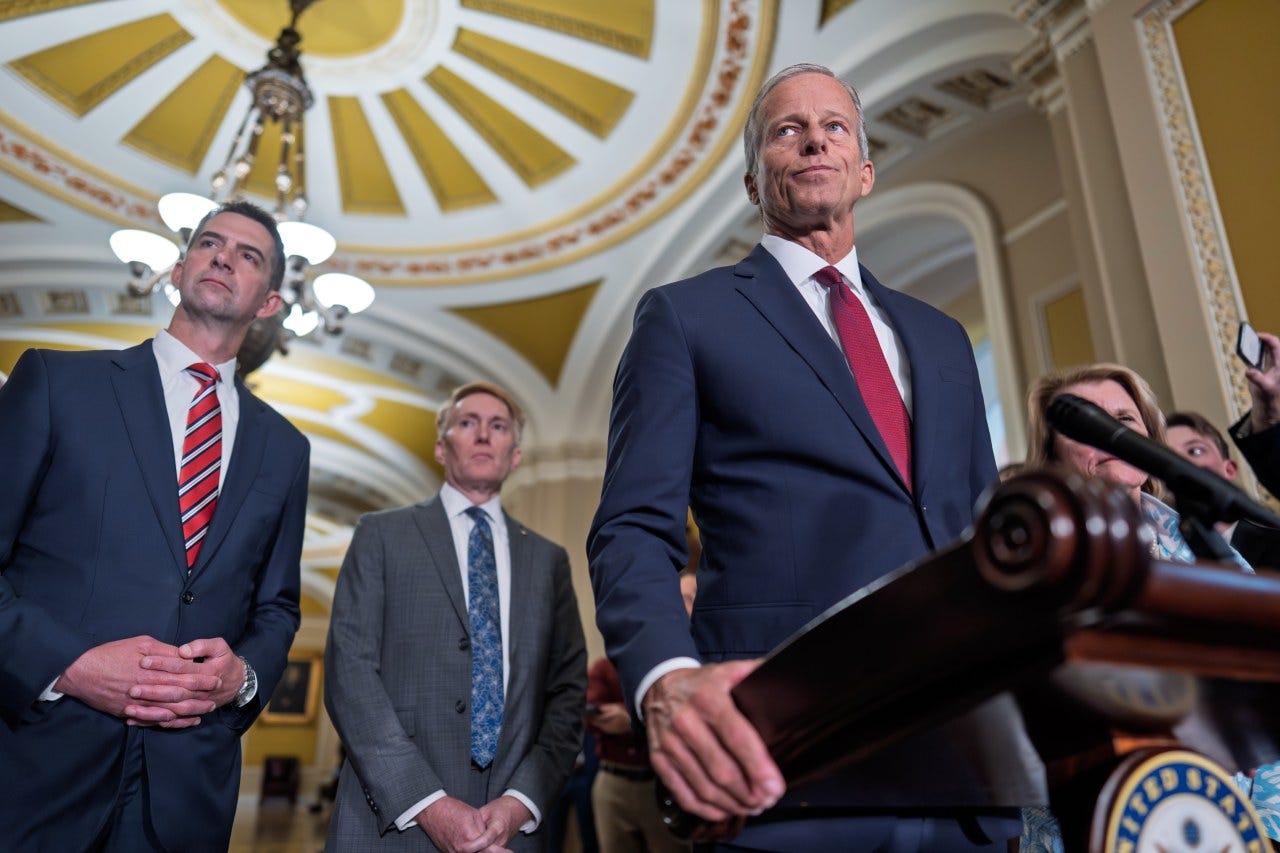
GOP opposition to Trump’s $1.776 billion ‘anti-weaponization’ fund was refreshing and effective.
By Jack Butler
One Ring to Heal Them All

Health trackers can quantify your sleep and activity, but a good life is about more than numbers.
By Mary Julia Koch
About Free Expression
Free Expression is a daily newsletter on American life, politics and culture from the Opinion pages of The Wall Street Journal.
Published directly to your inbox Monday through Friday, Free Expression features news and commentary from WSJ Opinion editors, regular columnists and other contributors.
Sign up and start reading Free Expression today.
A lot of people don't like the smell of fish, cooked or not. When I worked in an office years ago, I got into a whole brouhaha with someone because I used to eat cans of sardines or tuna at my desk for lunch. They sat in the next cubicle and claimed that the smell bothered them. Management sent me to the break room to eat my fish.
We also had a ban on microwave popcorn, again because the smell bothered some people.
“Precrime”- from Philip K. Dick’s story The Minority Report and the film with Tom Cruise, now with AI instead of precog’s. I saw this coming!